The bottleneck is called middle management 🗄️

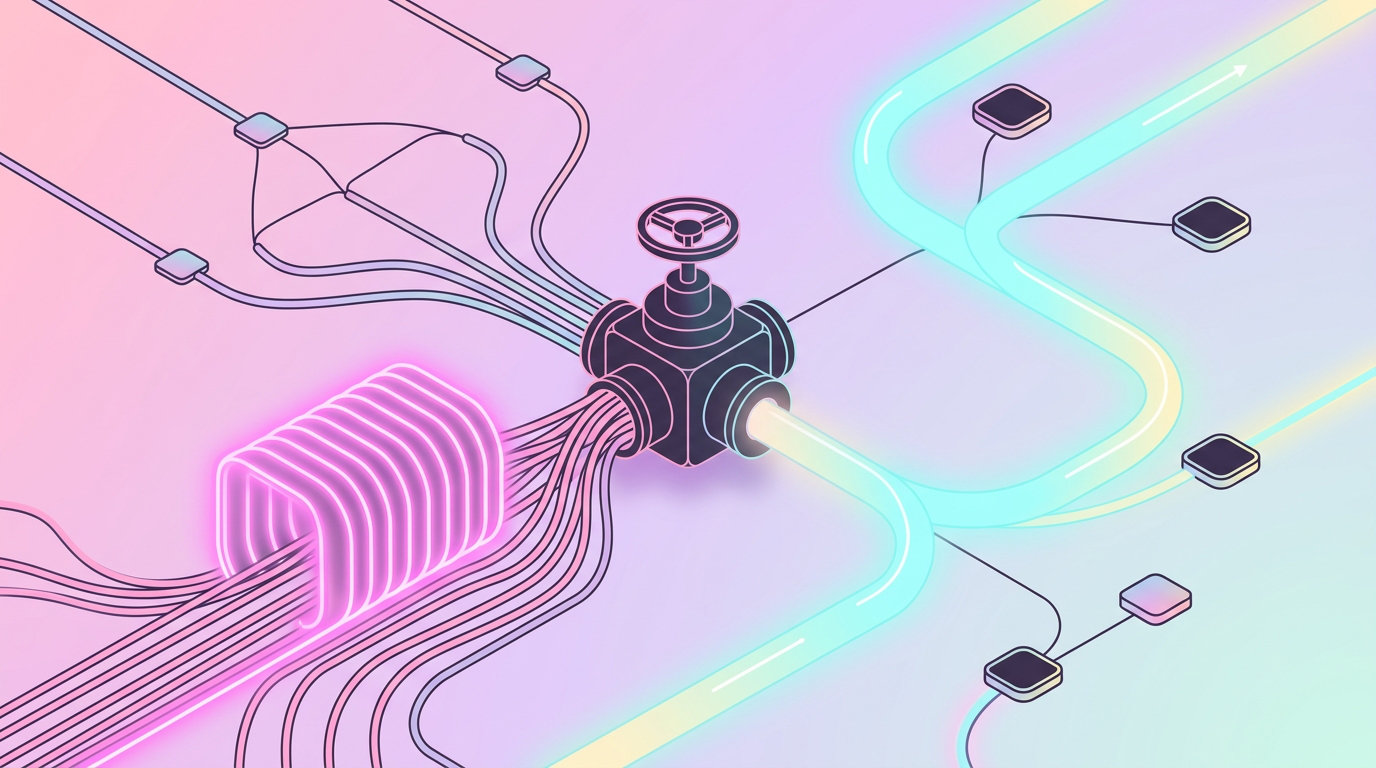
TL;DR: AI does not bypass middle management. If the system uses it as a mandatory service desk, it increases its load. If it gives it a mandate, signals, and time, it turns it into the multiplier you need.
It is not a person, it is a queue 🚧
Every transformation promises to remove repetitive work. Often it just moves it: more experiments to approve, more dashboards to read, more exceptions to decide. Middle management becomes the point where every question the organization failed to make autonomous ends up. It is not that managers do not want to change: it is that the system handed them a role without power, and a power defined only as veto.
The lazy answer is to call them resistant to change. The useful one asks which decisions could live inside the team, which data arrives too late, and which policies are so vague that interpreting them requires a meeting. When every request must pass through an office, the bottleneck is not the person occupying the office: it is the architecture of delegation.
One chilling number: according to Infosys, only 22% of middle managers actively participate in their company’s AI transformation. Translated: we are building the future with three quarters of management sitting in the stands, and then we wonder why decisions slow down. You do not need a management science degree to predict the rest.
Resistance or capacity? 🧯
There is a word I hate, because it closes conversations instead of opening them: “resisting.” Every time a project stalls, someone produces the moral diagnosis: they resist, they need convincing, they need to be worked around. The problem is that most “resisters” are actually overloaded: too many flows to coordinate, too many conflicting metrics, too little time to learn.
The HBR strand describing middle management as “buried, not elevated” captures the deception perfectly. The company declares that the middle layer is strategic and then treats it like a traffic light. It piles onto that role the uncertainty it lacks the courage to resolve elsewhere: priority decisions, policy interpretation, conflict mediation. Then, when the light turns permanently red, it talks about “change fatigue”: a capacity problem sold as a willingness problem.
Do not get me wrong: change fatigue exists, and it is real. But it is a diagnosis you can only make after exhausting the organizational ones, not before. If a middle manager has eight meetings a day and twenty approvals a week, the problem is not their willpower: it is that they have been made the joint between systems that do not speak the same language.
Ambiguity is the fuel of meetings 📅
The meeting is not the symptom: it is the ambiguity treatment plant. When a policy is vague, when two reports say different things, when nobody has the mandate to decide, the calendar fills with rituals in which people try to rebuild a coherence the system does not have. And if AI enters the picture without removing that ambiguity, meetings do not decrease: they become meetings held to validate the agent’s output. The middle manager ends up acting as the notary for things a decent policy should have already settled.
The real measure of a transformation is not how many prompts people use per day: it is how many questions stop needing a human at the centre. When ambiguity disappears, the manager stops being an interpreter and becomes a designer again. Coordination, finally, goes back to being what the name promises: removing waits, not adding them.
From gatekeeper to flow designer 🧭
A lightweight AI Council should set boundaries and priorities, not centralize every choice. Managers can protect time for champions, remove handoffs, and use forward-looking metrics instead of chasing the latest report. It is less theatrical than a new org chart, but far more effective. AI, if designed well, can actually take 70% of the questions off the middle manager’s plate that should never have landed there in the first place: the ones whose answer is already contained in the data or in a decent policy.
The paradox is that the very technology accused of bypassing management is the one that could give management its real work back. If the organization stops using managers as a service desk, middle management becomes again what its name promises: someone who stands between vision and execution, and translates one into the other.
Coordination is only value when it removes uncertainty. If it produces uncertainty, it is a wait with a desk.
It is the same shift we see in the senior role, which moves from executor to orchestrator, and in managing an AI team: those who can untangle vague directives are worth more than those who execute fast. The difference is that seniors learned the game early; middle managers keep being defined by the organization as approval terminals.
Dig into lightweight AI governance and value streams and flow to turn approvals into operating rules. The test is simple: after the next policy change, count the meetings you saved. If the number is zero, you did not “manage the change”: you only moved the fatigue around.